

The Belgian brokerage sector is undergoing a fundamental transformation. Digitalization, consolidation, growing societal expectations, and an increasingly dense regulatory environment are forcing the industry to strategically reposition itself. In this context, the national association of insurance brokers, previously BVVM-UPCA, has announced a new name and direction: Becobra (Belgian Commercial Insurance Brokers and Risk Advisors).
But this change goes far beyond rebranding. It marks a broader, structural evolution of the sector, where agility, specialization, and client focus take center stage. The initiative is being driven by Becobra’s members themselves, who are shaping the future of the industry from the inside out.
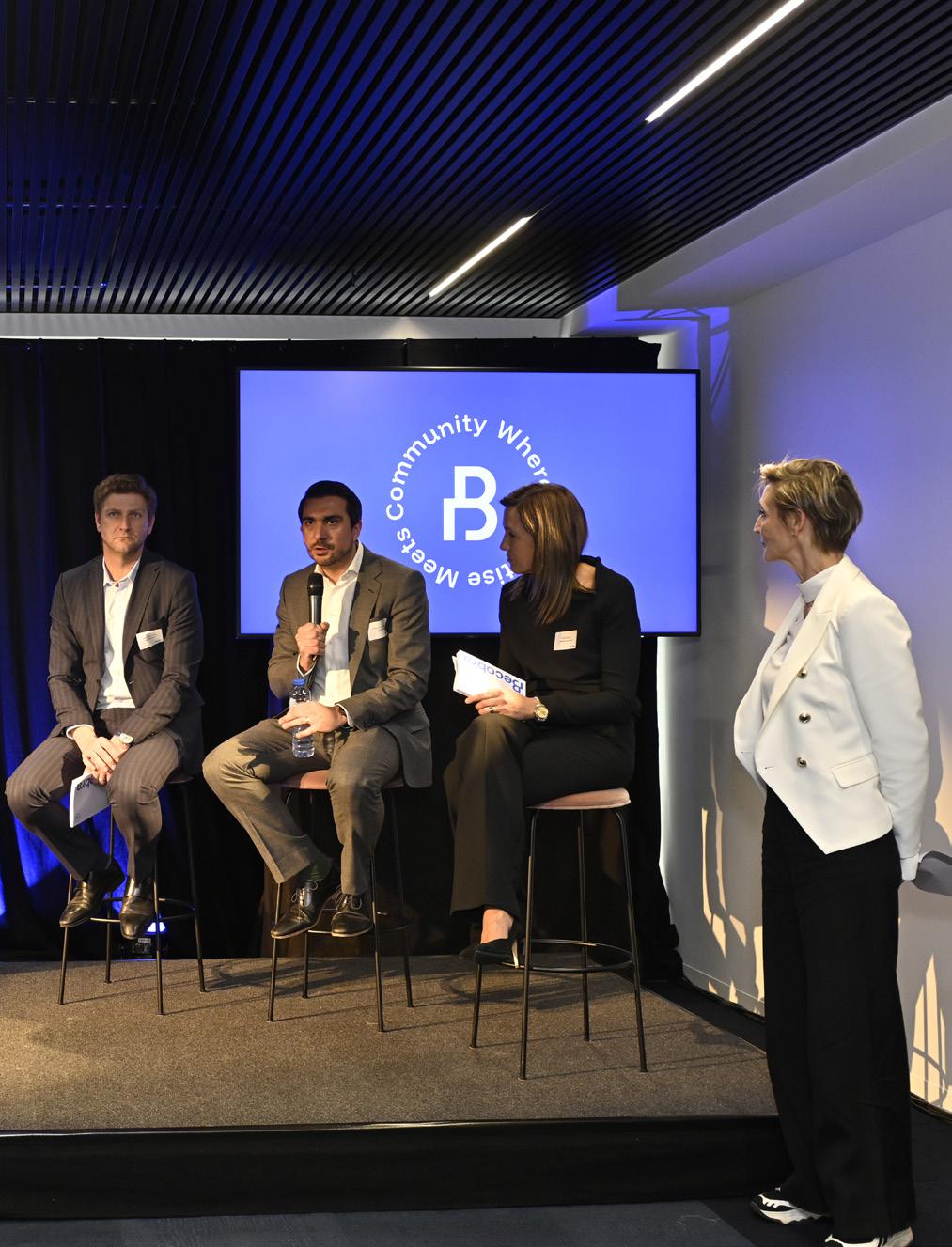
A recent leadership discussion, facilitated by Valérie Nolens, CEO of Becobra, brought together six leading brokers to explore the key challenges and opportunities ahead. Their contributions reflect not
only the internal dynamics of the brokerage world, but also the growing intersection with technological, societal and political forces.
A New Name, a Renewed Direction
“Our sector must adapt to a changing world”, says Steve Sartor (Concordia), chairman of the association. “Talent attraction is harder than ever, technology is reshaping our business, and the regulatory burden is growing. With Becobra, we are building a modern, dynamic and future-oriented federation”
Why Becobra?
- Belgian : emphasizing the local market
- Commercial : highlighting the day-to-day business of members
- Insurance Brokers & Risk Advisors : reaffirming the advisory role and added value
The name also reflects feedback from younger professionals in the sector, indicating a need for a brand that resonates with the next generation. Becobra responds to that call, combined with updated articles of association and a new office meant to foster collaboration.
The reinforcement of the technical committees – Legal Affairs & Compliance, Social Affairs, Systems and Operations, Market Solutions Life, and Market Solutions Non-Life – will serve as a nerve center for mobilizing expertise from both within the sector and beyond. These committees draw on market-specific knowledge, legal insight and academic research to shape practical, forward-looking strategies. They integrate feedback from external experts and stakeholders, increasing their role as proactive hubs for industry alignment.
A More Complex Risk Landscape, Higher Expectations
The insurance environment today is marked by increasing geopolitical instability, economic pressure, and changing customer profiles. These shifts demand a reassessment of traditional risk models.
“What once felt distant now hits closer to home”, says Lawrence Wagner (Cigna International Health Services). “The IGO and NGO clients we work with face rising costs and tighter budgets. Companies across the board experience similar pressures. Keeping insurance programs sustainable is a major concern.”
Pedro Matthynssens (Vanbreda Risk and Benefits) warns of daily cybersecurity threats: “We register serious incidents every week, and in 4% of those cases, the financial impact exceeds €1 million. 60% of the cases result in losses over €100,000.”
He also stresses the role of brokers in mitigation: “We support clients with awareness programs, ethical hacking, phishing tests, or post-incident support. Cybersecurity isn’t just a technical issue – it’s one of the most critical risks companies face today.”
In the employee benefits domain, Matthynssens adds, long-term absence due to illness is reaching critical levels. “Half a million Belgians have been out of work for over a year. Brokers have an active role to play in prevention, reintegration, and overall wellbeing strategies.”
Additionally, pension affordability is emerging as a societal risk under the new government. “This could open up new opportunities for brokers in guiding employers and employees alike”, Matthynssens notes.
From Compliance Burden to Competitive Advantage
Over the past decade, insurance intermediaries across Europe have faced a significant increase in compliance-related obligations. The European Union has been a central driving force behind this regulatory expansion, aiming to enhance consumer protection, financial stability, and market integrity. This growing wave of regulation is one of the most pressing issues for brokers today. Yet it offers more than just administrative weight. It can serve as a lever for credibility and market strength.
“Regulation is not the enemy”, says Dorsan Van Hecke (Wilink Insurance). “It’s the playing field. Our job is to navigate it smartly and stay ahead. Compliance starts from a good place – building trust. As it raises barriers for new actors, it becomes a differentiator for established brokers.”

Regulation is not the enemy. It’s the playing field.
Dorsan Van Hecke (Wilink Insurance)
Yet, Sartor cautions: “There’s a risk that overregulation will overlook business clients. Too much focus is placed on consumer protection as if all clients were individuals. The corporate market has different needs.”
Even in a sea of rules, our added value stands firm – and will only grow in the time to come.
Steve Sartor (Concordia)

Van Hecke adds: “Heavy regulation impacts the costs across the insurance value chain. That positions us as indispensable partners, especially if we take ownership of compliance and turn it into added value.”
Digitalization and AI: A Double-Edged Sword
Technology, and particularly AI, is poised to reshape how brokers operate. While the promise of efficiency and scale is real, it comes with significant challenges around integration, ethics, and talent.
“We can’t do without AI”, says Matthynssens. “We’re piloting several projects. It’s a costly technology, but it will improve productivity and reduce human error. Smaller brokers are also exploring how to make targeted use of AI, often in niche domains.”
Van Hecke emphasizes thoughtful adoption: “AI boosts analysis, but we must stay critical. There’s a real risk of dependency and losing human expertise. At the same time, we must train teams to use AI effectively while maintaining their judgment.”
Digital transformation isn’t new, but it’s accelerating. This evolution is closely tied to growing client demands for transparency, real-time accessibility, and frictionless digital experiences expectations that are reshaping the industry’s approach to service. It’s redefining the service standards brokers must meet. Clients now expect instant access and simplified communication.
As Matthynssens pointed out, “On the P&C side (property and casualty insurance), clients now expect real-time access to information about their policies, claims, and risks – paralleling the convenience of tracking a parcel online. Delivering such transparency has become a necessity rather than a luxury. In the realm of Employee Benefits, there’s a pressing need for communication that is more intuitive, responsive and tailored. While the industry has largely struggled to meet these expectations, emerging technologies offer promising solutions to bridge this gap.”

Clients now expect real-time access to information about their policies, claims, and risks – paralleling the convenience of tracking a parcel online.
Pedro Matthynssens (Vanbreda Risk & Benefits)
Van Hecke also warns about cybersecurity and data privacy: “We must stay alert. Everyone wants their own AI solution, often without understanding the risks. Biases and vulnerabilities are real.”
Consolidation and Specialization: Room for All?
IIn the insurance brokerage sector, a wave of consolidation is reshaping the landscape as larger firms extend their reach through mergers and acquisitions, while smaller brokers carve out specialized niches to remain competitive. This dynamic does not signal the demise of independent specialists; instead, it highlights that adaptability and targeted expertise are crucial in a rapidly evolving market.
As Leen Verheyen (Hillewaere Insurance) observes, “Smaller players will remain relevant, as brokers are the preferred distribution channel for insurers in Belgium. Furthermore, these players will secure their relevancy through specialization. Niche areas like cyber require deep expertise and quick responsiveness. That’s where they can shine.”
Technology platforms may help these niche providers bridge resource gaps, but even with such tools, many smaller firms still face intense pricing pressure in the marketplace. Meanwhile, clients are grappling with greater complexity in their risk profiles and in turn are demanding more specialized advice from their brokers. Consolidationamong larger brokerages can help meet these client expectations by providing the scale required for e.g. robust ESG compliance, detailed reporting, and extensive staff training.
However, Dirk Ector (ADD) cautions, “During this transition, we must not lose sight of the client.” This underscores that maintaining a client-centric focus must remain paramount even as the industry consolidates and grows.

Consolidation should serve the client – not the other way around.
Dirk Ector (ADD)
Client Centricity and Human Skills in a Digital Era
In a sector increasingly shaped by automation and AI, the human factor is nevertheless emerging as a critical differentiator. While technology enhances efficiency and delivers the tools to meet growing client expectations, it is the human interface – empathy, interpretation, and communication – that ultimately builds trust.
As automation accelerates, brokers are called upon not just to provide technical solutions, but to interpret complex client needs and deliver tailored guidance.
Matthynssens adds: “Human skills will determine the winners of tomorrow. Technical tools are important, but trust, empathy, and understanding the client’s real challenges will always make the difference.”
Ector confirms: “The client wants speed, accessibility, and a personal approach. Digital tools and data will help us deliver that.” Yet, as he points out, the real challenge lies in using data effectively: “Data is easy to talk about, hard to use well.” He foresees a decisive shift in skillsets: “AI will handle the ‘what’. The real value lies in the ‘how’. Human skills like empathy and interpretation will define success.” He reinforces this point: “The future of our profession depends not only on data, but on how well we connect with people. Skills like listening, translating needs into solutions, and building trust – those are irreplaceable.”
The ‘what’ may increasingly be handled by machines, but the ‘how’ remains deeply human. And that’s where our value lies.
Dirk Ector (ADD)
Verheyen echoes this view from a talent development perspective: “Young talent seeks environments where ideas are welcome, data leads to strategy, and there’s room for growth. Technology enables – but people make it happen.”

Young talent seeks environments where ideas are welcome, data leads to strategy, and there’s room for growth.
Leen Verheyen (Hillewaere Insurance)
Diversity and Wellbeing: Foundations for Sustainable Growth
Beyond market mechanisms, Becobra places strong emphasis on values that ensure long-term resilience: diversity, inclusion, and wellbeing.
Matthynssens: “We believe strongly in diversity. Our company has 50 vacancies. With half the population in Antwerp and its surrounding areas – where our headquarters are located – having migration roots, and one third of local students coming from diverse backgrounds, we must embrace that diversity, we must change if we want to attract and retain talent.”
Lawrence Wagener highlights mental health: “Post-COVID, mental health issues have increased by 20–40%. Often invisible, sometimes stigmatized – it’s a silent pandemic. Employers must create resilient workforces.”
This includes training managers and building a culture that prioritizes health and balance – for employees, and for the broader workforce our sector supports.
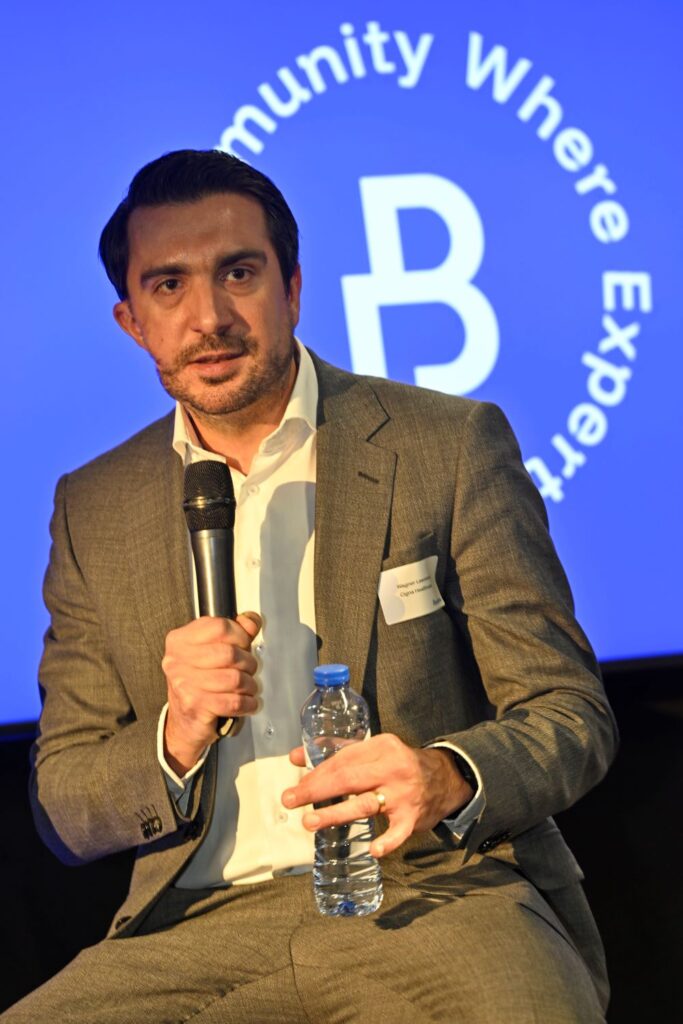
Diversity and wellbeing are not trends. They are pillars of future-proof organizations.
Lawrence Wagner (Cigna International Health Services)
Toward a Federation with Real Impact
As a professional association, Becobra is not only responding to internal change – it is positioning itself as a central voice in the public debate around insurance, risk, and resilience.
Sartor concludes: “We increase our relevance by tackling today’s key issues – cyber, governance, compliance, enterprise risks – and by aligning with other federations where needed.”
Becobra also aims to connect with academia, politics, and the wider public. These partnerships help position the federation at the intersection of knowledge, influence, and innovation – ensuring that its strategic priorities remain aligned with societal trends and the future needs of both members and clients. These alliances are meant to amplify our role, influence policy, and attract the next generation of professionals. Not to forget risk owners from within the industry – those who manage, assess, and help mitigate complex exposures – as vital partners in this evolution.
There is significant opportunity for Becobra’s next leadership to build on this foundation and deliver tangible impact.